- customerservices@rawzalogistics.com
- Global Expertise with A Focus on Reliability & Efficiency!


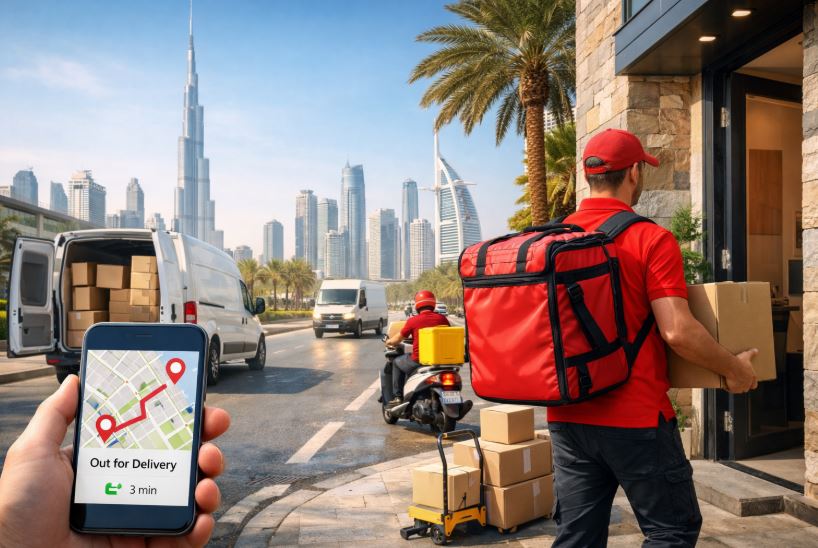
Last mile delivery and procedures in dubai
The last mile delivery is a crucial element of supply chain success in a modern, customer-driven economy, where time is of the essence. As companies strive to provide higher speeds, better reliability, and affordability in the delivery process, the last mile of delivery, or the last month of the delivery process in most cases, is critical in determining customer satisfaction and brand image. Last mile delivery is not only a need but an opportunity in the dynamic logistics center such as Dubai.
What is Last Mile Delivery?
Last mile delivery is the last process in the logistics process whereby goods are delivered at the location of the end customer after they have left the distribution center or logistics warehouse. Traffic congestion, density of delivery, availability of customers, and infrastructure in cities are some of the factors that make this stage the most complicated and costly stage of the supply chain.
Last mile operations have become a complex technological, innovative and precise operation in Dubai, where e-commerce is rapidly expanding and consumers have extremely high demands.
Significance of Last Mile Delivery in Dubai
Dubai is a significant trade and logistics hub in the globe, which necessitates effective last mile delivery to support businesses of various sectors, such as retail, e-commerce, health, and food services. The customers of the region demand:
- Same day delivery or next-day delivery.
- On the fly monitoring and alerts.
- Flexible delivery options
- Contactless and secure transactions.
To fulfil these expectations, there is a need to have smooth processes, well-developed logistic systems and proper operational systems.
Key steps in Last-Mile Delivery
- Order Processing and Allocation
The last mile trip will commence after an order is given. The system checks the order information, address correctness, availability and schedules of the product delivery. The orders are then allocated to the closest distribution center or fulfillment hub to reduce transit time.
The use of automated systems to distribute orders can be common in advanced logistics companies of Dubai because of the need to utilize resources in the most effective manner and speed up the process.
- Route Optimization
Planning of routes is an important process in the last mile delivery. Dubai is a densely populated city with a high rate of traffic, and, in such cases, the logistics providers employ intelligent route optimization to find out the most efficient delivery routes.
These systems take into account the following variables which include:
- Traffic conditions
- Delivery time windows
- Distance and fuel efficiency
- Number of stops per route
This is because optimized routing minimizes delays, operational expenses, environmental footprint, and enhances the speed of delivery.
- Fleet Management
Last mile operations require a well managed fleet. A wide variety of vehicles are used by the logistics providers in Dubai: vans, bikes, temperature-controlled trucks, etc., depending on the nature of the goods.
The processes of fleet management involve:
- GPS tracking of vehicles.
- Preventive maintenance schedules
- Driver performance monitoring
- Fuel consumption analysis
These procedures’ guarantee reliability, safety and cost-effectiveness.
- Real-Time Tracking and Communication.
One of the expectations of modern delivery services is the act of transparency. Customers want to be aware of the precise location of their orders at each location.
To fulfill this need, firms adopt:
- Real-time tracking systems
- SMS and app notifications that are automated.
- Estimated time of arrival (ETA) notifications.
Customer experiences’ enhanced by effective communication which also minimizes missed deliveries and operational inefficiencies.
- Delivery Execution
The last good handover is the most apparent stage of the last mile process. The delivery staff is trained to adhere to standard procedures which include:
- Verifying customer identity
- Handling of goods safely.
- Gathering evidence of delivery (digital signatures or OTP authentication)
- Providing contactless delivery where necessary.
The stage of professionalism and efficiency can contribute greatly to customer satisfaction.
- Reverse Logistics
Last mile delivery and returns and exchanges go hand in hand, particularly the e-commerce sector. Effective reverse logistics practices make sure that returned products are recovered, examined and disposed of in a short amount of time.
In Dubai, there have been companies that are moving towards lean-back systems of returns to increase customer loyalty and trust.
Challenges in Last Mile Delivery
Nevertheless, there are still a few challenges’ with the last mile delivery in Dubai:
Urban traffic and congestion
Delays and higher operational expenses can be experienced due to heavy traffic in major locations.
High Delivery Expectations
The customers are in need of quicker delivery times, usually at little or no extra cost.
Addressing and Accessibility
Addresses that are incomplete or unclear may lead to delivery routes that are problematic and lead to inefficiencies.
Cost Management
The cost of last mile delivery has a major share in total shipping costs, and its optimization is critical.
Technology driving last mile efficiency
The logistics sector in Dubai is leading in the use of technology. Firms are using new solutions to both address difficulties and improve performance in delivery:
Artificial Intelligence (AI)
Systems operating with AI are used to analyze data to enhance route planning, predicting demand and efficiency in delivery
Internet of Things (IoT)
Real-time monitoring of vehicles and goods delivered is also possible due to connected devices that provide the adjustment of visibility and control.
Automation
Manual errors are minimized by automated sorting and dispatch systems and operations are accelerated.
Digital Platforms
Customer portals and mobile applications offer a smooth interaction, tracking, and feedback process.
Last Mile Delivery sustainability
As the environmental responsibility gains more and more attention, the logistics providers in Dubai are becoming environmentally responsible, namely:
- Electric and hybrid delivery vehicles
- Efficiencies by use of optimal paths to save on fuel
- Combined deliveries’ in an attempt to reduce journeys
- Eco-friendly packaging solutions
In addition to minimizing the environmental impact, sustainable logistics are also consistent with the international best practices and regulatory requirements.
Future of Last Mile Delivery in Dubai
Innovation and smart city efforts’ are shaping the future of last mile delivery in Dubai. New trends consist of:
Autonomous delivery vehicles
Autonomous vans and drones are being investigated to improve efficiency and lessen reliance on humans
Intelligent Pickup locations and Lockerrooms.
The solutions offer convenient delivery facilities, particularly in densely populated cities.
Hyperlocal Warehousing
Micro-fulfillment centers situated nearer to customers allow for quicker deliveries’
Data-driven decision making
Advanced analytics’ will remain essential for enhancing operations and elevating customer experiences
Conclusion
The last mile delivery is not a mere logistical requirement but a strategic operation – which has a direct influence on customer satisfaction, operational efficiency and business growth. A competitive market such as Dubai requires firms to embrace new and improved technologies, smooth operations and consumer-oriented practices in order to be on the front burner
Businesses can provide timely, reliable and cost-effective services by streamlining each phase of the last mile process including the allocation of orders to the end delivery. With the industry changing, those organisations focusing on innovation and efficiency will be in the best place to support the increasing needs of the modern consumer.
Ultimately, a balance between technology, infrastructure and operational excellence is the key to becoming the master of last mile delivery in Dubai, which makes it the foundation of effective logistics management in the area.